
Written Theory
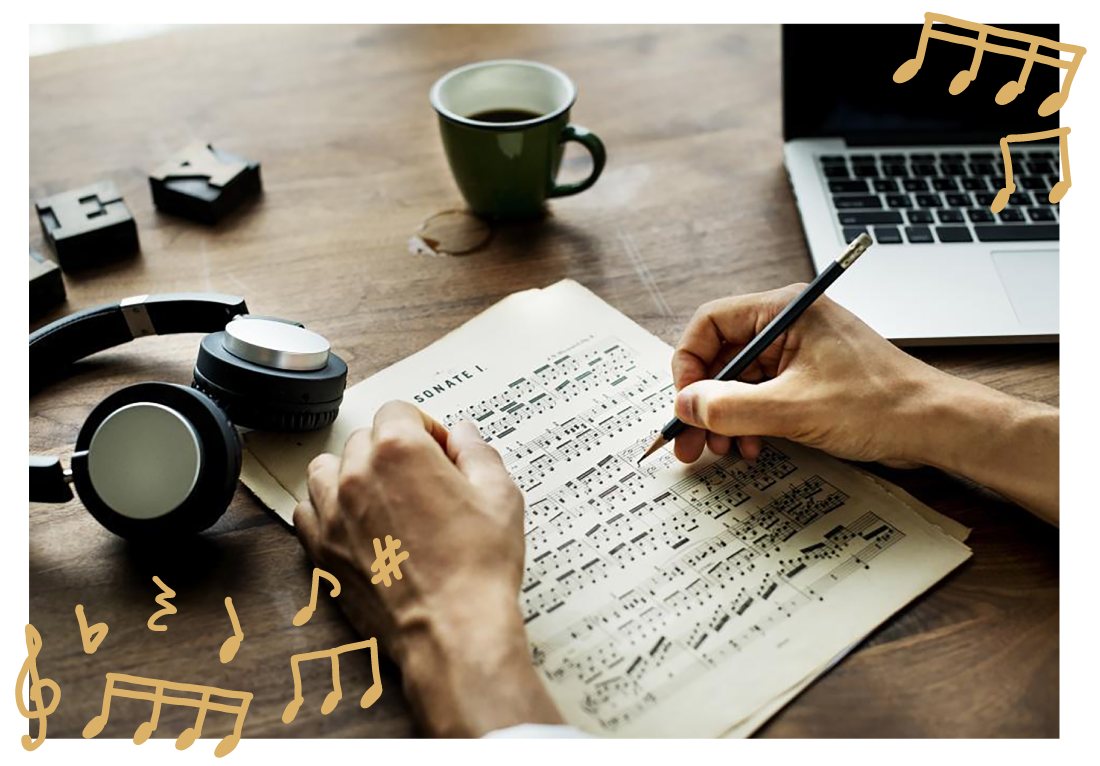
Music theory is the foundation of every great musician—it helps you see, hear, and play with deeper understanding. That’s why theory and history are woven into all piano programs, with engaging written work introduced from the very first lesson.
Subjects and Levels

Intermediate Theory - RCM Theory 5, 6, 7, 8
These levels are co-requisites for RCM instrumental Levels 5-8. The topics covered provide the foundation for music writing: rhythm and time signatures; scales, triads, and key signatures; intervals; transposition; basic analysis; musical terms; and an introduction to history/music appreciation.

Keyboard Harmony - RCM Theory Levels 9, 10, ARCT
Keyboard harmony incorporates all the principles of written harmony, but is played on the piano instead of written on an exam paper. Students benefit from being able to hear what they are creating, while also learning how to play by ear and improvise. Please note: Students preparing for an RCM exam take their exam during the practical sessions in June.

Written Harmony & Counterpoint - RCM Theory Levels 9, 10, ARCT
Harmony is a co-requisite for RCM Levels 9 and up. Harmony takes the elements learned in Intermediate Theory and uses them to write and harmonize melodies, with a focus on the four-part writing style of J.S. Bach. Students learn the principles of chord voicings and good voice leading, as well as how to analyze various musical structures. Written exams are offered in May, August, and December.
Analysis - RCM ARCT
Students learn how to provide harmonic and structural analyses of fugues, sonatas, art songs, and modern compositional techniques. This course works very well when studied concurrently with ARCT Harmony as many concepts from ARCT Harmony are used in Analysis. Written exams are offered in May, August, and December.

History - RCM Levels 9, 10, ARCT
History is a co-requisite for RCM Levels 9 and up. Level 9 is an overview of Baroque, Classical, Romantic and Modern eras. Level 10 focuses on the Middle Ages to the Classical eras. ARCT History focuses on the 19th century to present day, including Canadian composers. Students will study composers’ lives and times, as well as listen to and study selected works from each composer. Written exams are offered in May and online exams are available anytime.
Thank you so much for your kindness and help for my kids with their harmony exams. With your guidance and help, they have not only successfully passed their exam, they have done better this time. We are so fortunate to have you as their teacher. They always talk about how lucky they are to have you.
Bonnie, written harmony parent
Get Set for Online Lessons
Before your online piano lessons begin, make sure you’re set up with everything you need.
You’ll need access to a laptop with a reliable internet connection, a webcam, and the Zoom app installed and ready to use. To ensure a smooth start, take a moment to review the online lesson checklist and setup tips.
Let’s get started!